Stop Losing Clients to the Lab You Don't Have
You don't need a corporate lab to practice science-backed tree care. You need a soil probe, a ziploc bag, and a relationship with the right university.
The big tree care companies have leaned on one advantage for decades: proprietary diagnostics. In-house labs. PhDs on staff. The message to homeowners is clear — trust us, we have the science.
But the science was never proprietary. The access was. That's changing.
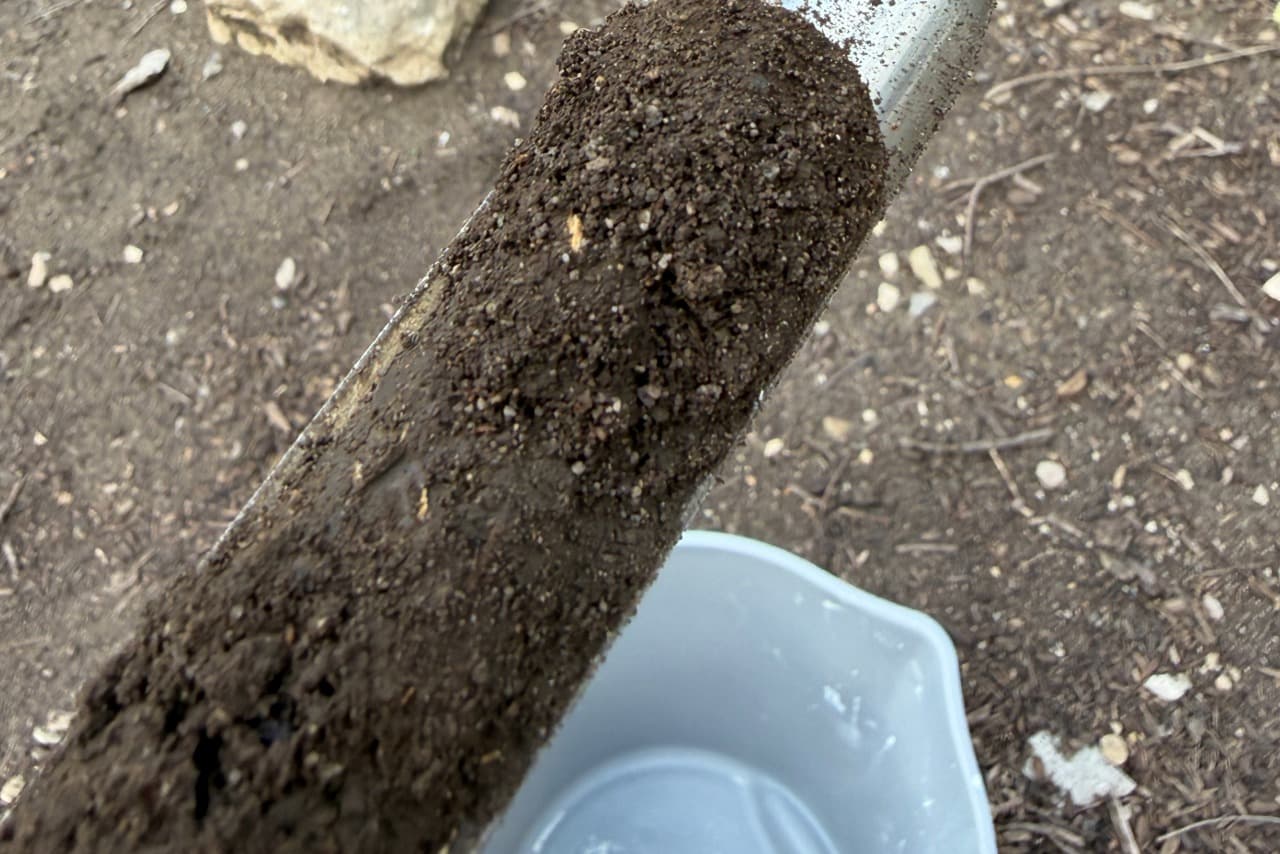
The Problem: You Diagnose It, They Take the Client
You walk a property. You see chlorosis creeping into a newly planted red maple. You suspect nutrient lockout — maybe iron, maybe manganese, maybe pH. You know enough to know you don't know. That's the honest position.
But honesty without a next step loses clients. The homeowner calls the big company. They run the test, deliver the diagnosis, write the treatment plan, and take the account.
You just became the referral source for your own competitor.
The Fix: Two University Labs Most Arborists Have Never Contacted
Every land-grant university in the country runs diagnostic labs that are open to working arborists. They don't do tree work. They don't want your clients. They give you data. You give your clients answers.
Soil fertility — Penn State AASL. Analyzes pH, phosphorus, potassium, magnesium, calcium, organic matter, and nitrogen. Includes lime and fertilizer recommendations tailored to your specified crop type. Print the submission form, bag a cup of air-dried soil, mail it with a credit card form. Total cost: roughly $20 per sample, shipped.
Disease and pest ID — Ohio State PPDC. PCR testing for pathogens like verticillium wilt, plus microscopy and culture work. They accept digital photo submissions for a preliminary read before you ship a physical sample. That first email costs you nothing.
These are the same caliber of labs that the corporate companies use — minus the conflict of interest. Your state has its own version through the National Plant Diagnostic Network. The model scales wherever you work.
What the Results Look Like in ArbAssist
Here's a real soil analysis from a residential property in central Ohio, logged in ArbAssist's SoilLab:
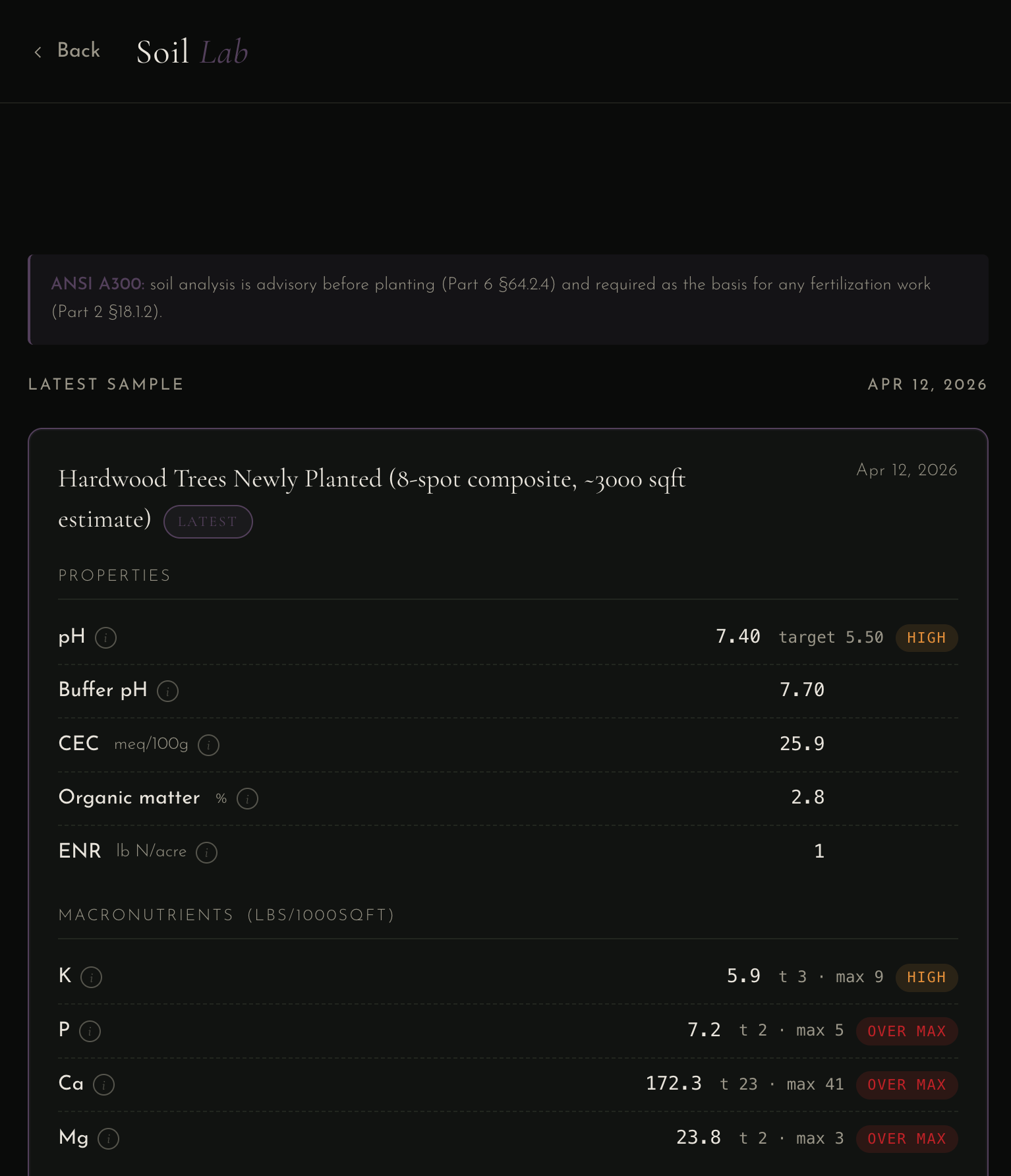
The soil told a clear story: pH 7.4 (alkaline), calcium at four times the maximum, and micronutrients like iron and manganese that are physically present but biologically locked out by the high pH. Lockout, not absence.
Without the test, a typical recommendation is "add iron." With the test, the recommendation becomes: elemental sulfur to gradually lower pH, chelated iron (EDDHA) for immediate relief, skip broadcast phosphorus entirely, and build organic matter through mulch and compost. Retest annually to track movement.
That's not guessing. That's a treatment plan backed by lab work.
The Arborist Summary
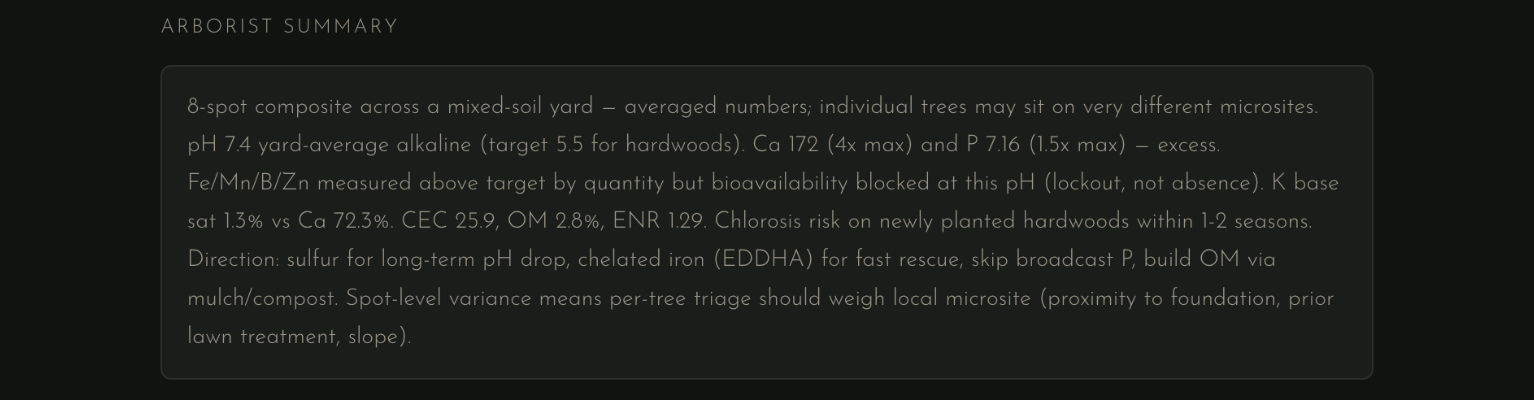
Every SoilLab result in ArbAssist includes a plain-language summary that bridges lab chemistry and tree care:
pH 7.4 yard-average alkaline. Fe/Mn/B/Zn measured above target by quantity but bioavailability blocked at this pH — lockout, not absence. Chlorosis risk on newly planted hardwoods within 1–2 seasons.
This is the language that separates a professional arborist from someone who showed up with a chainsaw. Your client hears it. Their insurance carrier reads it. Your ANSI A300 documentation backs it up.
Every Tree Deserves a Chart
When a doctor orders bloodwork, the results don't live on a sticky note. They go into a chart — alongside vitals, history, imaging, and treatment notes. The chart is the patient's story, told in data, across time.
Trees have never had that. Until now.
ArbAssist is the first electronic health record for trees. Your SoilLab results are the lab work. They sit alongside your field assessments, your treatment plans, your annual photos, and your ANSI A300 documentation — all in one chart, for one tree, on one property. When you retest next year, the new numbers land right next to the old ones. The trend tells the story.
Set baseline readings. Define targets — pH from 7.4 to 6.5 over three years. Apply amendments. Retest annually. You're building a documented care arc that no competitor can replicate without starting from scratch. Your client sees measurable progress. Your treatment plans are grounded in evidence. And your annual assessments carry the weight of real data — not just visual inspection.
Your Lab, Your Call
ArbAssist doesn't lock you into one lab. Penn State, Ohio State, your state's land-grant extension, a private soil lab you've trusted for years — if the science is credible, we'll log the results. The SoilLab module is built to accept data from any accredited source and normalize it into your tree's chart.
You pick the lab. We keep the record. The tree gets the care.
Getting Started
- Order a soil probe. A 36″ stainless steel T-handle with foot pedal runs under $50.
- Collect your samples. 15–20 cores at 8″ depth inside the drip line, composited and air-dried overnight.
- Ship to your lab. Penn State AASL accepts credit card payment by mail. Print the form, bag the soil, ship in a padded envelope. ~$20/sample all-in.
- For disease concerns, contact your state's plant diagnostic clinic. OSU's PPDC accepts digital photo submissions for a preliminary read — free.
- Log everything in ArbAssist. Your SoilLab dashboard tracks results, sets targets, and builds treatment plans that grow with each client relationship.
The science was never the barrier. Access was. Now every tree gets a chart — and every arborist gets a lab.
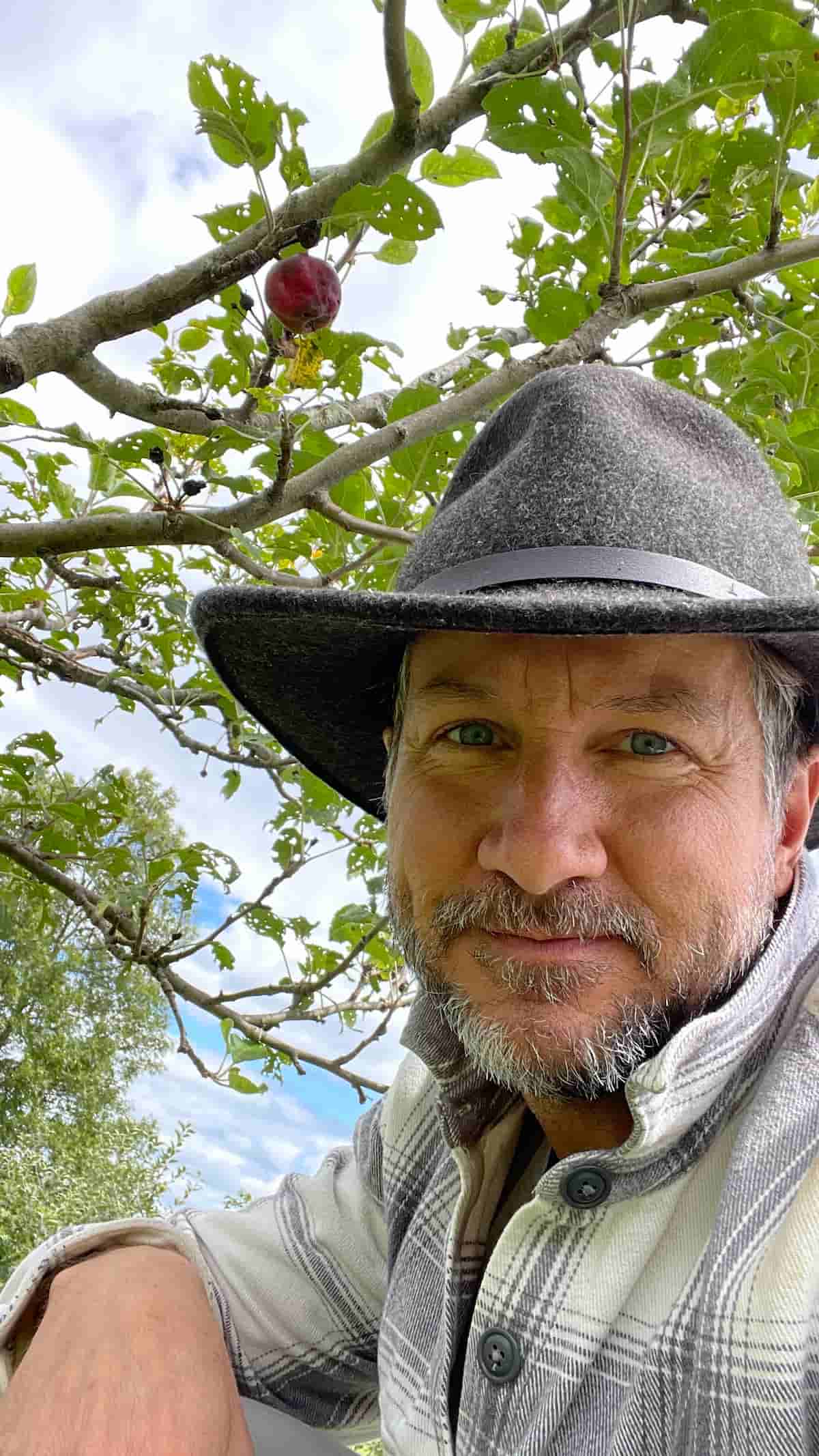
David All · Arborist in Upper Arlington, Ohio — by way of heritage apple orchards in Pennsylvania and old-growth conifers on the Olympic Peninsula. Builder of ArbAssist and CanopyKeep. Featured in The Guardian. Ohio Chapter ISA member · Arlington Tree Co.
I'm building ArbAssist's lab network and I'd love to hear from you — whether you're a soil scientist at a land-grant university, an extension agent who works with arborists, or an arborist in the field who's already running samples and has opinions about what works. The best tools get built by the people who use them. [email protected]